The Therapy Relationship
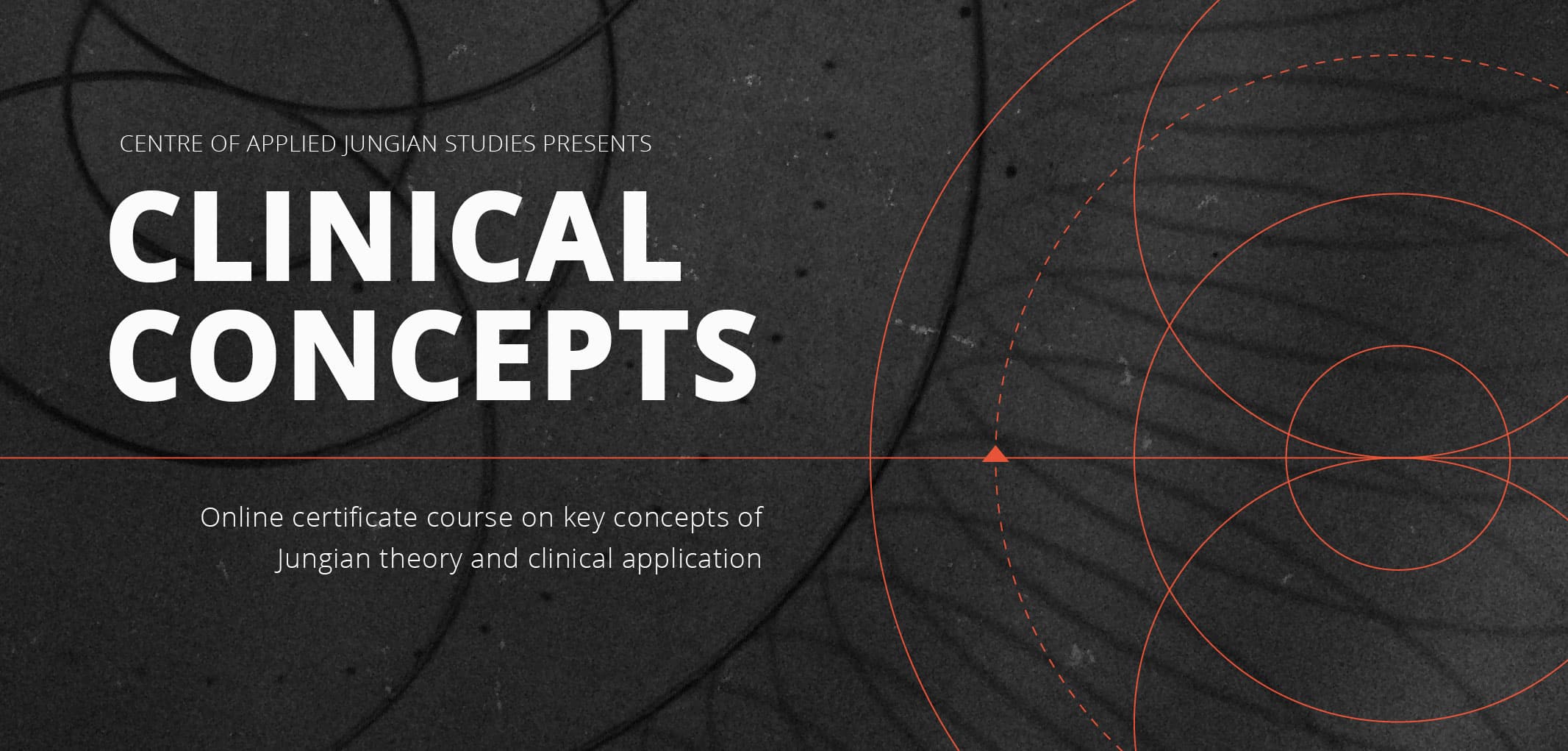
This course is aimed at psychotherapists, psychologists, counsellors, social workers, coaches, and those working in the mental health and wellness field, wishing to understand the fundamentals of Jungian and post-Jungian psychology in clinical practice. This is a unique focused and in-depth learning opportunity in Jungian and post-Jungian theory and clinical application, with a global faculty of senior Jungian clinicians and academics.
PLEASE NOTE: This course is not a formal training or accreditation as a Jungian analyst. It is offered as continuing professional development for practising psychotherapists. In terms of the number of CEUs offered for the course, you will need to check with your local accreditation body.
Course Overview
Modules
Presented by Andrew Samuels
02 THE INFANT RELATIONSHIP TO OBJECTS
Presented by Sue Austin
03 INTERPRETATION IN JUNGIAN ANALYSIS - ART AND TECHNIQUE
Presented by Mark Winborn
04 EGO, SHADOW AND THE FOUR STAGES OF TRANSFORMATION
Presented by Stephen Farah
__________________________
Modules Include
* A 2-hour webinar with the module presenter, a formal lecture and an extended Q&A.
These webinars are presented live and recorded for those unable to make the live webinar.
* Essential reading, set by each module presenter and made available as part of the programme reading pack.
* A self-reflective application for each module.
*Access to our learning platform with all module materials, applications and CPD questionnaires.
Course Process per Module
* Recorded Lecture
* Work through Applications provided to deepen you personal experience and understanding of the module content.
* Complete a 15 question multiple choice questionnaire – Only required should you wish to receive CPD- Continuing Professional Development Points/ CEU – Continuing Education Units.
Time Requirements
You will need a total of six to eight hours per month. All studying can be done in your own time, with the exception of the webinar, which happens at a fixed time – every other week, on a Saturday. The webinar is also recorded, should you be unable to make the live broadcast.
Accreditation
Course Ethos
‘Jungian and post-Jungian Clinical Concepts’ was inspired by the challenge presented by the Jungian scholars and clinicians at the ‘Spectre of the Other in Jungian Psychology,’ an International Association of Jungian Studies conference that took place in Cape Town in 2017. Where, the urgent need to reach those previously excluded from the teaching and ideas of Jungian psychology, be it for reasons of location, economics or historical prejudices, was unequivocally sounded. In its own modest way, this course sets out to achieve that. By virtue of offering top-class tuition in Jungian psychotherapy, outside of its traditional setting, being non-localised (online), and a tiered fee structure, the aim is explicitly to democratise the learning opportunities offered by Jungian psychology, broaden the reach of these tools and to be as inclusive as possible.
Faculty
Andrew Samuels is Professor of Analytical Psychology at the University of Essex and a Jungian analyst in practice in London. He has been referred to as ‘the most celebrated of today’s Jungian analysts’ (in American Imago). He is a former Chair of the UK Council for Psychotherapy. His many books have been translated into 21 languages and include the ground-breaking Jung and the Post-Jungians (1985), A Critical Dictionary of Jungian Analysis (1986), The Father: Contemporary Jungian Perspectives (1986), Psychopathology: Contemporary Jungian Perspectives (1989), and Persons, Passions, Politics, Psychotherapy: Selected Works of Andrew Samuels (2015). For more information visit https://www.andrewsamuels.com/.
Sue Austin, Ph.D. and member ANZSJA, works in private practice in Sydney and is a training analyst with the Australian and New Zealand Society of Jungian Analysts. She specializes in working with adults who have eating disorders and/or disorders of the self (i.e., people whose experience of subjectivity is abject) and her practice comprises general analytic work with adults and supervision of clinicians in Australia and internationally. Sue has run numerous clinical workshops and seminars in Australia, New Zealand, the UK, Europe and the USA, and has published several clinical papers and a book. http://www.sueaustin.net.au/
Mark Winborn, PhD is a Jungian psychoanalyst and clinical psychologist. He is a training analyst with the Inter-Regional Society of Jungian Analysts and the C.G. Jung Institute Küsnacht. His primary areas of interest are analytic technique and the integration of psychoanalytic theories. He has published or edited five books: Deep Blues: Human Soundscapes for the Archetypal Journey, Shared Realities: Participation Mystique and Beyond, Interpretation in Jungian Analysis: Art and Technique, Beyond Persona: On Individuation and Beginnings with Jungian Analysts (with Lavinia Țânculescu), and Jungian Psychoanalysis: A Contemporary Introduction (part of the Routledge series – Introductions to Contemporary Psychoanalysis), as well as numerous articles and book chapters. He received the Gradiva prize from the National Association for the Advancement of Psychoanalysis for the best article published in 2022 and was a finalist in 2014 for the best edited book in psychoanalysis. He lectures widely both in the USA and internationally.
Stephen Anthony Farah, MA is the co-founder and Head of Learning and Research at The Centre for Applied Jungian Studies South Africa. He is the current co-Chair of the International Association of Jungian Studies. Stephen holds an honours degree in analytical philosophy from the University of the Witwatersrand and a master’s degree in Jungian and Post Jungian Studies from the University of Essex. Stephen’s areas of interest include psychoanalysis, film, psychoeducation, consciousness, individuation, and Future Studies. His published papers include ‘True Detective and Jung’s Four Steps of Transformation’ published in ‘The Routledge International Handbook of Jungian Film Studies’ (2018) and ‘The Freak: in Search of Jung’s second Personality’, in the anthology ‘The Spectre of the Other in Jungian Psychoanalysis: Political, Psychological and Sociological Perspectives’, (Routledge 2022) which he also co-edited.